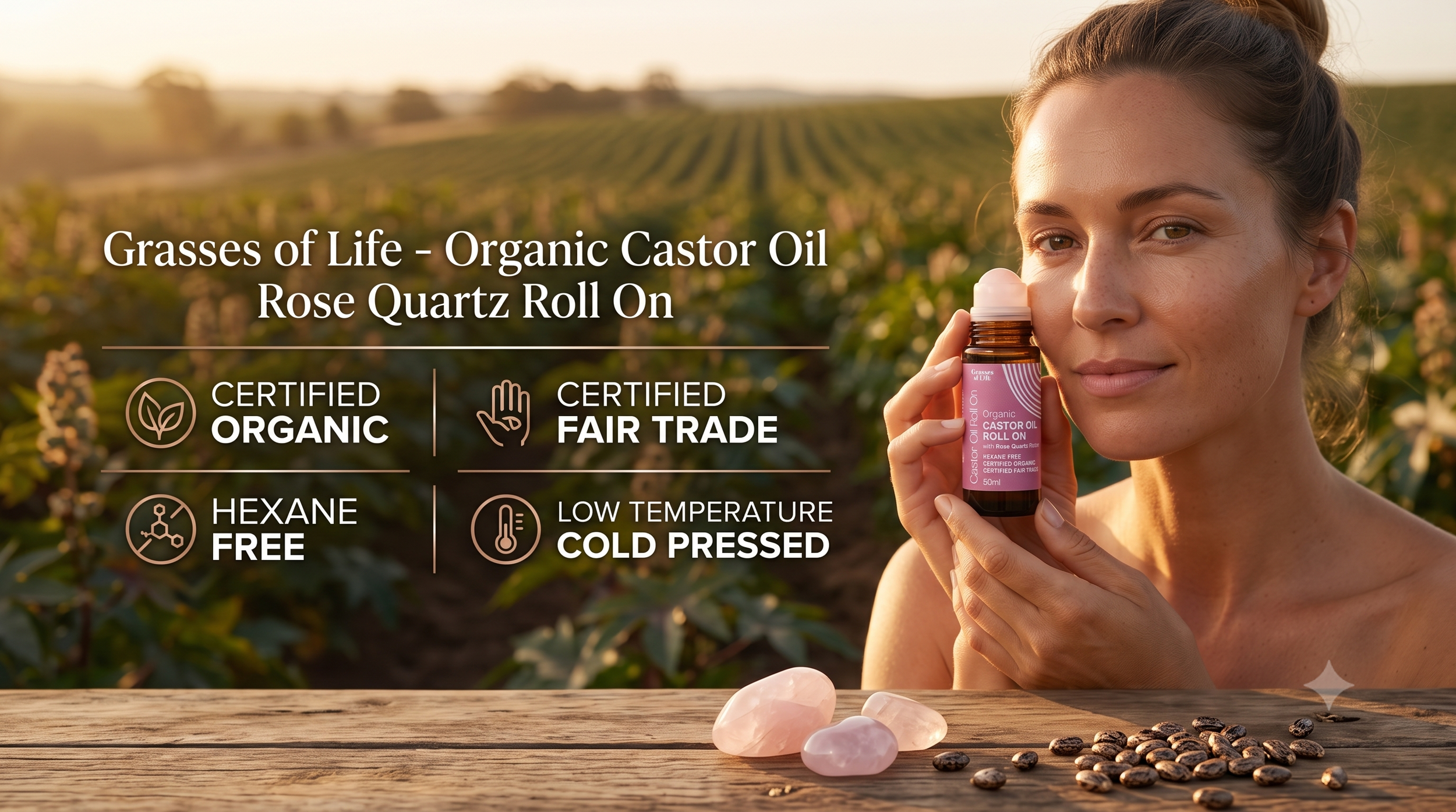
Understanding Purity & Properties Organic Castor Oil: What to Look For?
Not all castor oils are created equal and for those seeking genuine therapeutic benefits, the differences in production methods matter far more than most labels reveal.
I went to India to find out for myself how organic castor oil was grown and produced by my suppliers in India. Purity in castor oil is not a marketing buzzword, it is a measurable outcome of how the seed is grown, how the oil is extracted and how rigorously the final product is tested.
Many oils are produced on shared lines that handle both organic and conventional seeds, creating a risk of cross-contamination with synthetic residues. I was pleased to find out that our supplier in India has a dedicated organic only processing line, in a separate factory. This ensures that from the moment the castor seed arrives from the farm to warehouse door, right to the press, to the moment it is bottled, the oil remains uncompromised and true to its organic certification.
Extraction method is equally critical. High-temperature processing (even cold pressing), while efficient, degrades essential nutrients. Grasses of Life uses low-temperature cold pressing technology to ensure our oil retains its full spectrum of beneficial properties.
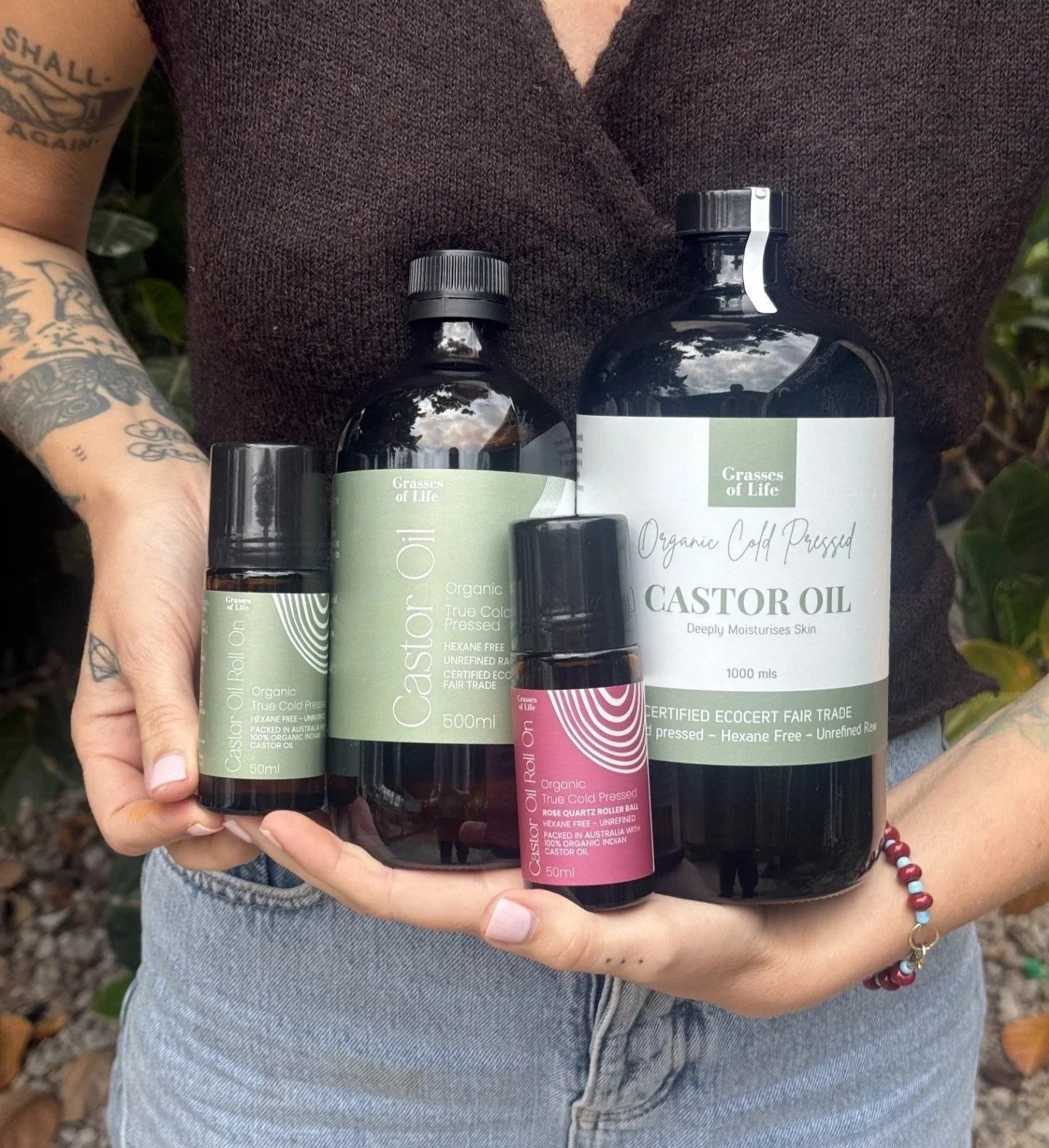
By avoiding destructive heat, we preserve the natural antioxidants, essential fatty acids (riconoleic acid) and Vitamin E that nourish the skin, strengthen hair, and promote healthy hair growth. The result is a vibrant, clear light yellow colour, with a mild, slightly nutty aroma, a testament to its undamaged cellular structure. If your castor oil is dark or clear like water, it’s probably not a ‘True Cold Pressed’ castor oil or its has been refined.
Why We Test Our Organic Castor Oil? Organic certification alone does not guarantee the absence of environmental contaminants such as heavy metals or pesticide drift from neighbouring farms. Independent third-party testing provides the only reliable defence. Grasses of Life tests every batch, offering a level of transparency that allows consumers to apply the oil with genuine confidence, not just blind faith.
Purity is not about extravagant claims. It is about asking the right questions: How was it grown? How was it pressed? Did the oil get hot during cold pressing? Was it pressed on organic only processing equipment? Was it third party tested? When those answers are clear and verifiable, the choice becomes straightforward. And that is exactly what responsible producers should be offering.
Article Written by Grasses of Life